ATM Cave Belize: Tours, Rules, Fitness and What to Expect
In this guide
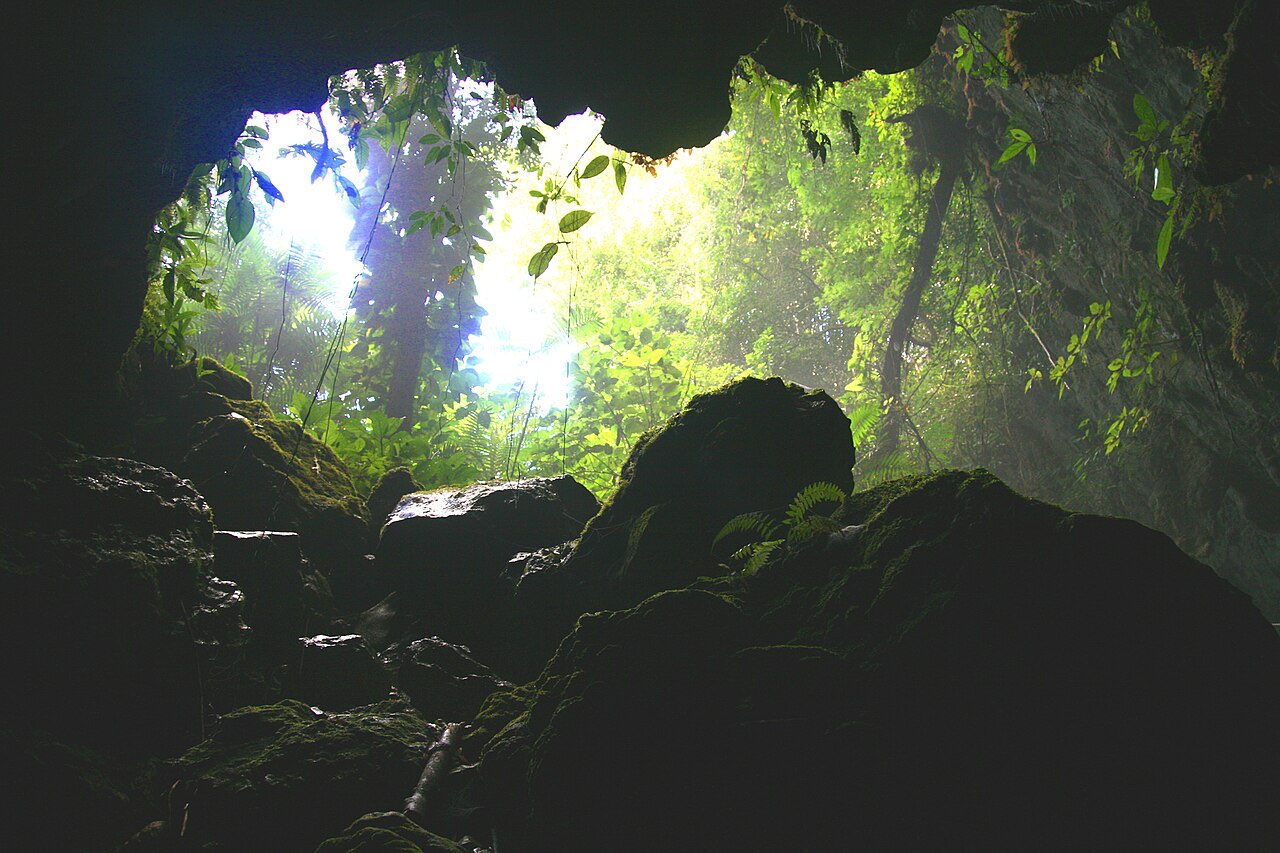
Actun Tunichil Muknal, almost always shortened to the ATM Cave, is the one tour in Belize that people still talk about years later: a wet, physical walk into a river cave that ends in a chamber of Maya pottery and human skeletons left where they were placed more than a thousand years ago. You can only go with an ATM-certified guide, you cannot bring a camera, and you need to be able to swim. Book a full-day tour from San Ignacio a few days ahead. The official entrance ticket is BZ$60 (US$30) for non-residents as of November 2026, and full-day tours run around US$145 per person (BZ$290); ask whether the ticket is included in the quote.
This guide covers the official rules, what the day involves physically, what it costs, how to choose an operator, and who should skip it. Fees and rules come from the Institute of Archaeology’s ticketing site, part of Belize’s National Institute of Culture and History (NICH), read in November 2026.
ATM Cave at a glance
| Item | Detail (as of November 2026) |
|---|---|
| Entrance ticket | BZ$60 (US$30) non-resident; BZ$30 (US$15) resident |
| Example tour price | US$145 per person (BZ$290) shared, from San Ignacio (MayaWalk) |
| Guide | Mandatory; must be ATM-certified; max 6 visitors per guide |
| Hours | Site open 8 a.m.–5 p.m. daily; last tour 2 p.m.; no entry after 3 p.m. |
| Minimum height | 40 inches (about 102 cm) |
| Cameras | Prohibited inside the cave |
| Must you swim? | Yes, it is an official requirement |
| Tour length | A full day, about 8–9 hours door to door |
| Base town | San Ignacio, Cayo District |
Belize dollars are fixed at BZ$2 to US$1 by the Central Bank of Belize, so halving any BZ$ price gives the US dollar figure.
The rules, from the Institute of Archaeology
The NICH ticket page for the ATM Cave lists the conditions every visitor accepts. The ones that shape your day:
- An ATM-certified guide is mandatory. A general tour-guide licence is not enough; the guide must hold the specific ATM certification.
- Six visitors per guide, maximum. Bigger groups are split between guides.
- A signed liability release form is required before you enter.
- Minimum height of 40 inches, and you must be in good physical health and able to swim.
- Life vest and helmet with light are compulsory. Operators supply both.
- Long-sleeved shirt and proper footwear for rough ground are recommended.
- No cameras, video or recording devices inside the cave.
- No touching or climbing on formations, no running or jumping, no loud noise, and no litter.
- Timing: the site opens 8 a.m. to 5 p.m. every day, but the last tour goes in at 2 p.m. and no one enters after 3 p.m.
NICH’s ticketing terms add that ATM tickets must be bought in advance, through the ticket office at Cahal Pech in San Ignacio or online, and that all visits must be booked in advance with a licensed tour operator. Tickets are non-refundable, although NICH says it will consider an exchange when bad weather closes a site. In practice your operator buys the ticket and handles the paperwork.
Why no cameras?
The cave is an archaeological site with artifacts and skeletons lying exposed on the floor, not behind glass. A dropped phone or a careless step back to frame a photo can crack pottery that has survived more than a millennium. The ban is enforced, and guides take it seriously. Leave your phone in the van and treat the absence of photos as part of the experience.
What the day looks like
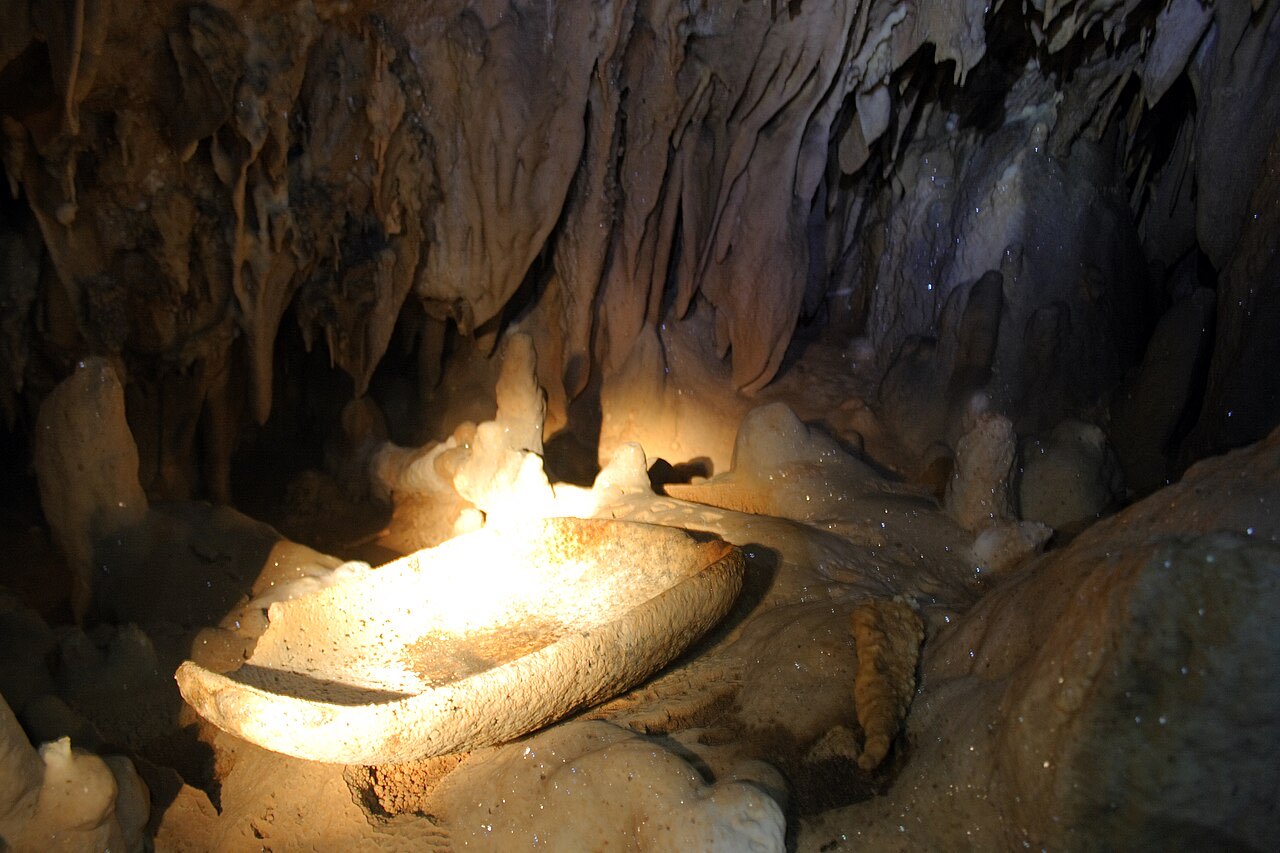
Tours leave San Ignacio around 8 a.m. Operators’ own descriptions put the drive at about an hour to an hour and a half to the trailhead in Tapir Mountain Nature Reserve, including a stop. From there the day runs roughly like this:
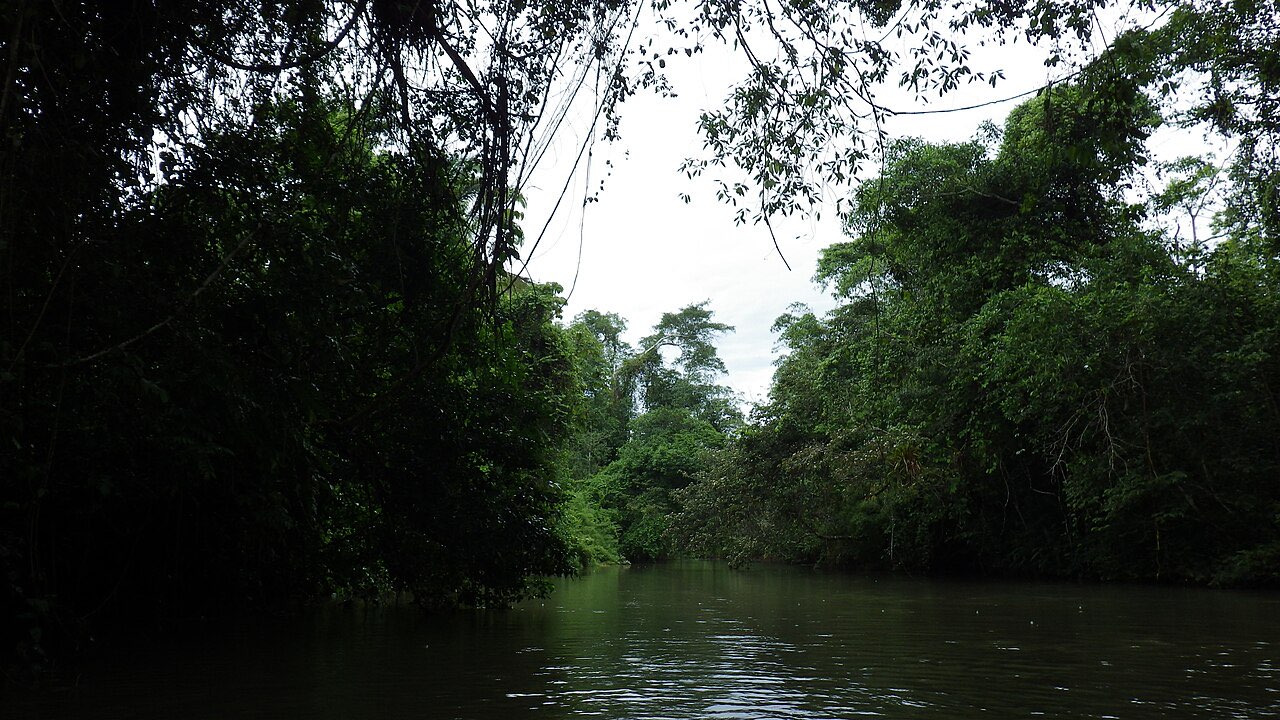
- The approach hike (about 45 minutes). NICH describes a 45-minute walk on jungle trails with several river crossings. MayaWalk Tours, one of the larger San Ignacio operators, describes three stream crossings that range from knee- to waist-deep, with a rope on the first.
- The swim in. The cave mouth opens onto a clear, spring-fed pool. You swim a few metres, roughly 10 to 15 seconds, into the dark. Your life vest helps, but you need to be comfortable in deep water.
- The river passage. For the next stretch you wade, climb and occasionally squeeze sideways along the underground river. Some passages narrow so you have to turn your head or bend for a moment; there is no crawling or rope climbing.
- The upper chamber. A ladder, about 12 feet according to MayaWalk, takes you up to the dry ceremonial chambers. Here you take off your shoes and continue in socks to protect the floor. This is where the pottery, stone tools and skeletal remains are.
- The way back. You return the same way, then hike out. Operators estimate about three hours inside the cave in total, followed by a late lunch, and back in San Ignacio around mid-afternoon.
What you see inside
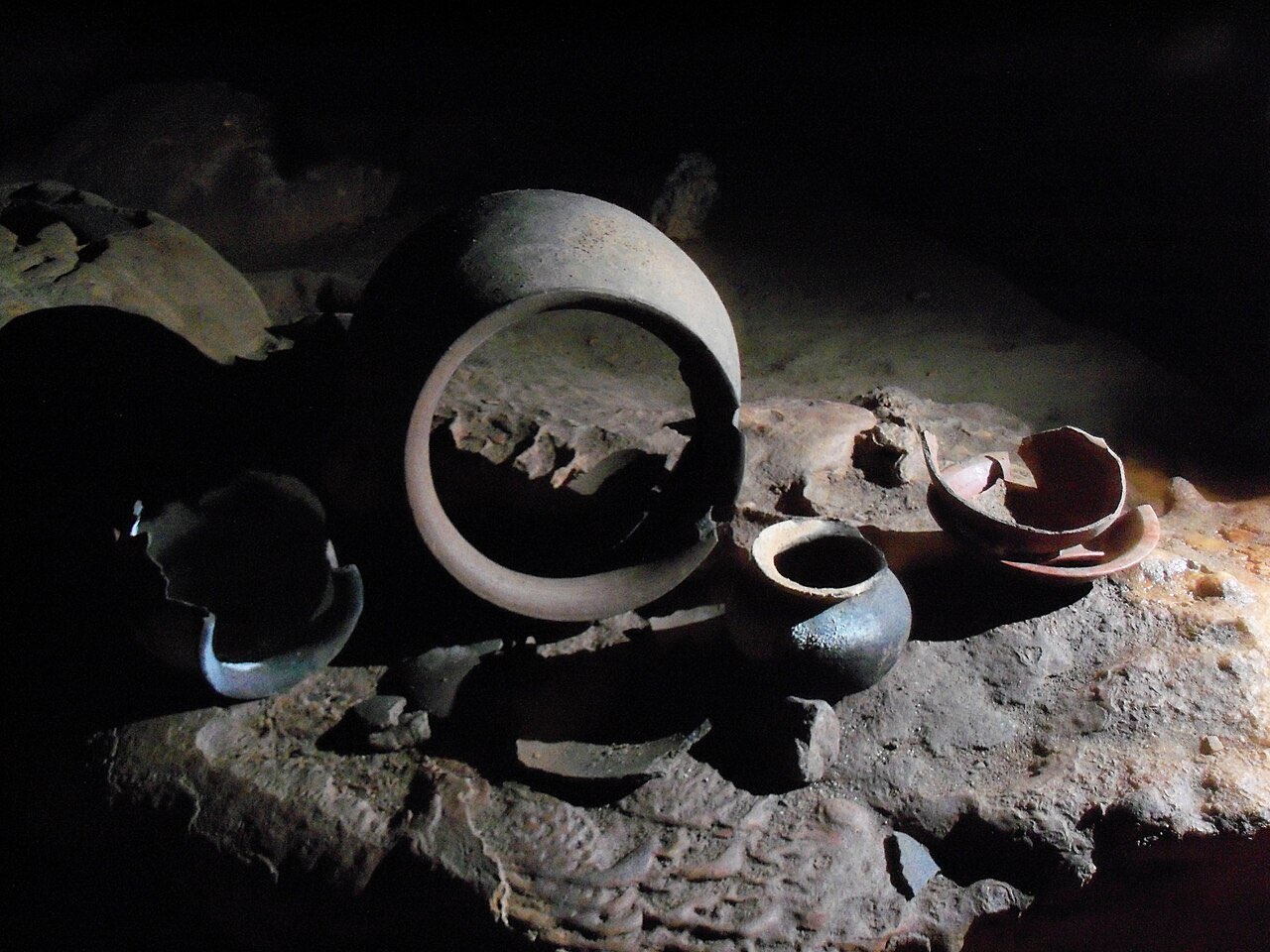
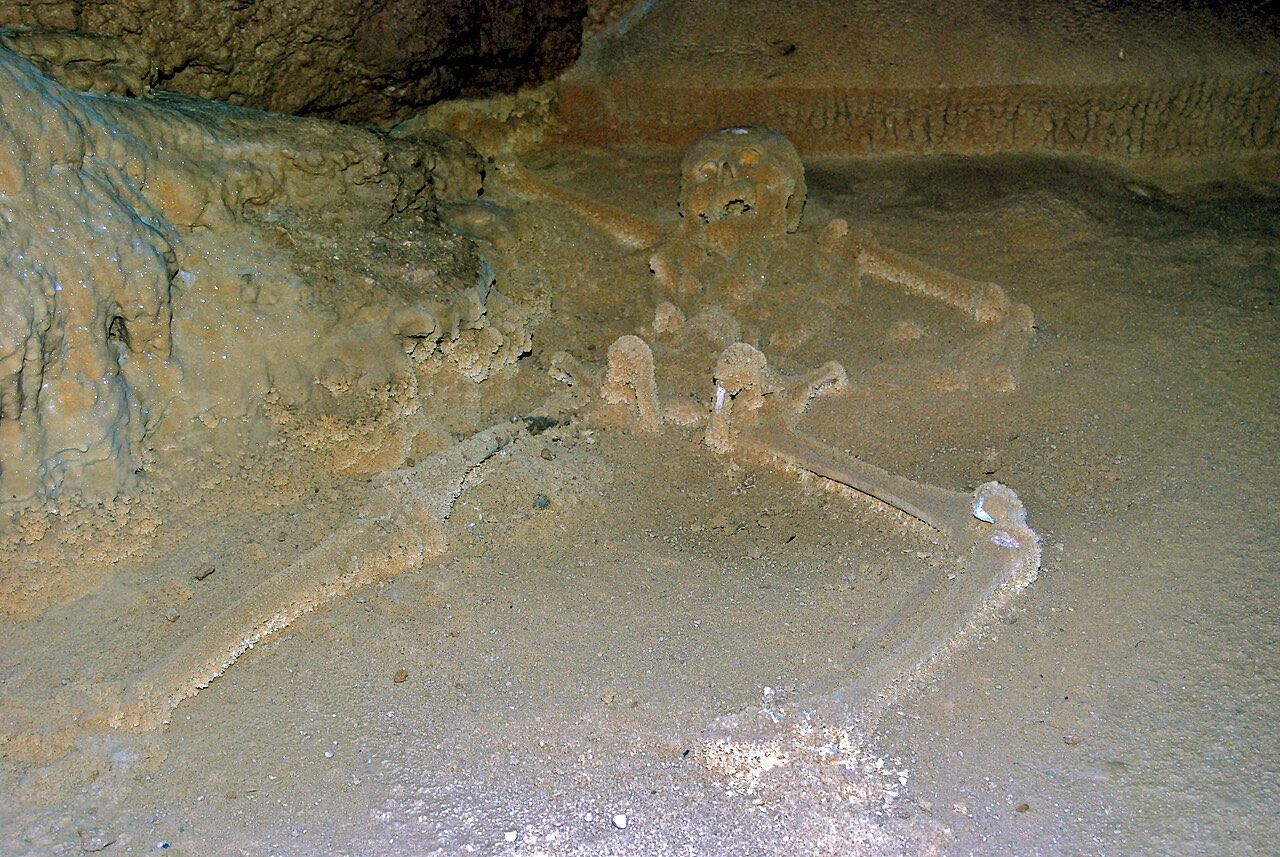
NICH describes in-situ ceramics, stoneware and skeletons, the remains of Maya ritual use of the cave. The best known is the “Crystal Maiden”, a complete skeleton whose bones have been coated in sparkling calcite. Operators describe close to 20 sets of human remains across the chambers, including adults and children, alongside large pots, many of them deliberately broken in ancient times. Guides explain what archaeologists believe happened here; the cave was a place of offering and sacrifice, and the atmosphere is sombre rather than theme-park.
How hard is it, really?
The ATM is not technical caving, but it is the most physically demanding standard tour in western Belize. Be honest with yourself on these points:
| Challenge | What it involves | Who struggles |
|---|---|---|
| Swimming | A short deep-water swim at the entrance, plus deep pools inside | Non-swimmers; the official rules require you to swim |
| Cold and wet | You are wet from the first river crossing until the end | People who chill easily |
| Scrambling | Climbing over boulders and up a ladder with wet hands | Anyone with knee, hip or balance problems |
| Tight spots | A few narrow gaps you pass sideways | Severe claustrophobia, though operators say most nervous visitors manage |
| Length | About three hours inside, a full day overall | Very young children, low stamina |
If you have a heart condition, are pregnant, or have mobility limits, this is the tour to skip. Cave tubing at Nohoch Che’en is the gentle alternative: you float through river caves on an inner tube, with no swim-in and no scrambling.
Choosing and booking a tour
Most visitors base themselves in San Ignacio; our San Ignacio guide covers where to stay. A few operators also run long days from Belize City, Hopkins or the cayes, but you lose hours to driving.
What to compare:
- Price and inclusions. As an example of a current published rate, MayaWalk Tours lists US$145 per person for its shared ATM tour, rising to US$155 from 20 December to 6 January, and US$250 per person for a private tour. Its page lists an 8 a.m. start, an 8 to 9 hour day and lunch. Before comparing prices, confirm with each operator whether the BZ$60 entrance ticket, transport and gear are included.
- Group size. The legal maximum is six per guide. Ask how many guides go on each trip.
- Departure time. An early start helps you get in ahead of other groups.
- Lunch and changing facilities. NICH lists restrooms, showers and a picnic area at the site.
- Weather policy. Heavy rain can raise the river and make the cave unsafe. Operators may cancel or reschedule, so ask how they handle it and leave a spare day in your plans.
The best-known operators fill up in the December-to-April dry season. Book a few days ahead, or a week or more over Christmas and Easter.
What to wear and bring
The official guidance is to wear long sleeves and footwear suited to rough terrain. Practically:
- Closed-toe shoes that grip when wet and that you do not mind soaking. Water shoes with thin soles are not enough for the boulders.
- Socks. You need them in the upper chamber, where shoes come off. Thick socks are more comfortable on rock.
- Quick-dry clothes and swimwear underneath. Skip cotton.
- A full change of dry clothes and a towel for the van.
- Insect repellent for the hike, and water.
- Leave behind: phones, cameras, GoPros, jewellery and anything you cannot afford to lose in a river.
Our Belize packing list has the full gear list for reef, jungle and cave days.
When to go
The cave is open year-round, but the river is lowest and the hike driest in the dry season, roughly November or December to May. In the rainy season, especially September and October, heavy rain can cancel tours at short notice. Our best time to visit Belize guide has the month-by-month detail.
Do the ATM early in your stay in Cayo, not on your last day, so a weather cancellation can be rebooked. It pairs well with a gentle day at Xunantunich afterwards, when your legs will thank you.
Mistakes to avoid
Assuming you can drive yourself and hire a guide at the gate. Tickets must be bought in advance and visits booked with a licensed operator.
Bringing a phone “just to keep it safe”. The rule covers all recording devices. Leave it in the vehicle.
Wearing sandals or flip-flops. You need shoes that stay on in river current and grip wet limestone.
Forgetting socks. Shoes come off in the upper chamber.
Booking it for your departure day. One heavy rain and you miss it. Leave a buffer.
Signing up a non-swimmer or a very young child. Swimming is a stated requirement, and three hours in a cold, dark cave is a lot for small children even if they meet the 40-inch rule.
Before you go
If you are planning the rest of western Belize around this tour, our things to do in Belize guide puts the ATM in context with the other caves, ruins and reef trips.
Fees, hours and rules here are from the Institute of Archaeology’s ticketing site and terms, read on 16 November 2026; tour details are from MayaWalk Tours’ published page on the same date. Fees and rules change, so confirm with NICH or your operator before you go.
Frequently asked questions
How much does the ATM Cave cost?
As of November 2026 the Institute of Archaeology's ticket site lists the Actun Tunichil Muknal entrance ticket at BZ$60 (US$30) for non-residents and BZ$30 (US$15) for residents. You cannot just buy that ticket and walk in, though: every visit has to be with an ATM-certified guide booked through a licensed tour operator. Full-day tours from San Ignacio are priced as a package; MayaWalk Tours, for example, posts US$145 per person (about BZ$290) for its shared tour with lunch. Ask each operator whether the entrance ticket is included.
Can you take a camera or phone into the ATM Cave?
No. The Institute of Archaeology's rules say cameras, video equipment and recording devices are strictly prohibited inside the cave. Operators leave them in the vehicle, and only the guide carries a dry bag. Plan to experience the cave without photos; the images you see online were taken before the ban or by permitted researchers.
How fit do you need to be for the ATM Cave?
Reasonably fit and comfortable in water. The official rules require visitors to be in good physical health and able to swim. The day includes a roughly 45-minute hike with stream crossings, a short swim into the cave mouth, about three hours of wading, scrambling over rocks and squeezing through narrow gaps, and a ladder climb to the upper chamber. It is not technical caving, but it is a long, wet, physical day.
Is there a minimum age for the ATM Cave?
The official rule is a height requirement rather than an age: all visitors, including children, must be at least 40 inches (about 102 cm) tall. Each child also has to cope with the swim, the cold water and three hours in the dark, so many families wait until children are older. Operators set their own age policies, so ask before booking.
Do I need to book the ATM Cave in advance?
Yes. The Institute of Archaeology states that ATM entrance tickets must be bought in advance, through the Cahal Pech ticket office or its e-ticketing site, and that all visits must be booked ahead with a licensed tour operator. Groups are capped at six visitors per guide, so in the December-to-April high season the best operators fill up days ahead.
Book an activity
Booked through GetYourGuide. We earn a commission if you book, at no extra cost to you — it never changes which option we recommend. How we work
Keep planning
- Cave Tubing in Belize: Nohoch Che'en, Tours and Costs
Cave tubing in Belize at Nohoch Che'en: the BZ$20 (US$10) reserve ticket, guide and height rules, tour prices, cruise-day crowds and Barton Creek.
Updated Nov 2026 - Ambergris Caye Guide: San Pedro, Reef Trips and Where to Stay
Ambergris Caye guide: getting to San Pedro by water taxi or flight, Hol Chan and Shark Ray Alley snorkel trips and fees, Blue Hole days, and which area to stay in.
Updated Nov 2026 - Best Time to Visit Belize: Month-by-Month Weather and Crowds
Best time to visit Belize: the dry season (roughly December to May), rainfall by month, hurricane season risk, whale shark season, and when prices and crowds peak.
Updated Nov 2026